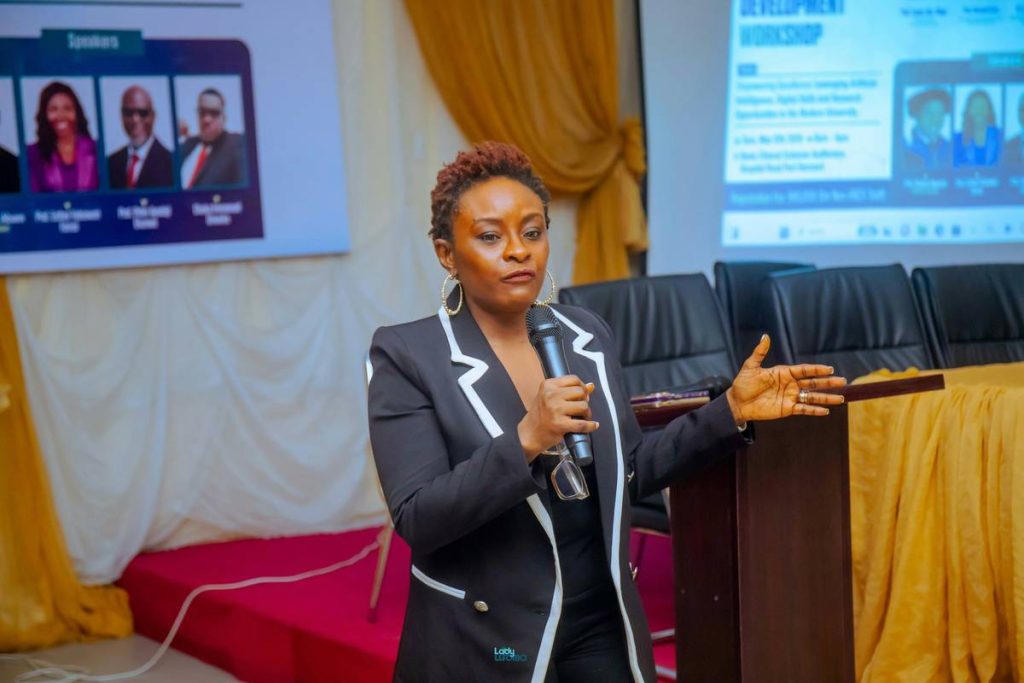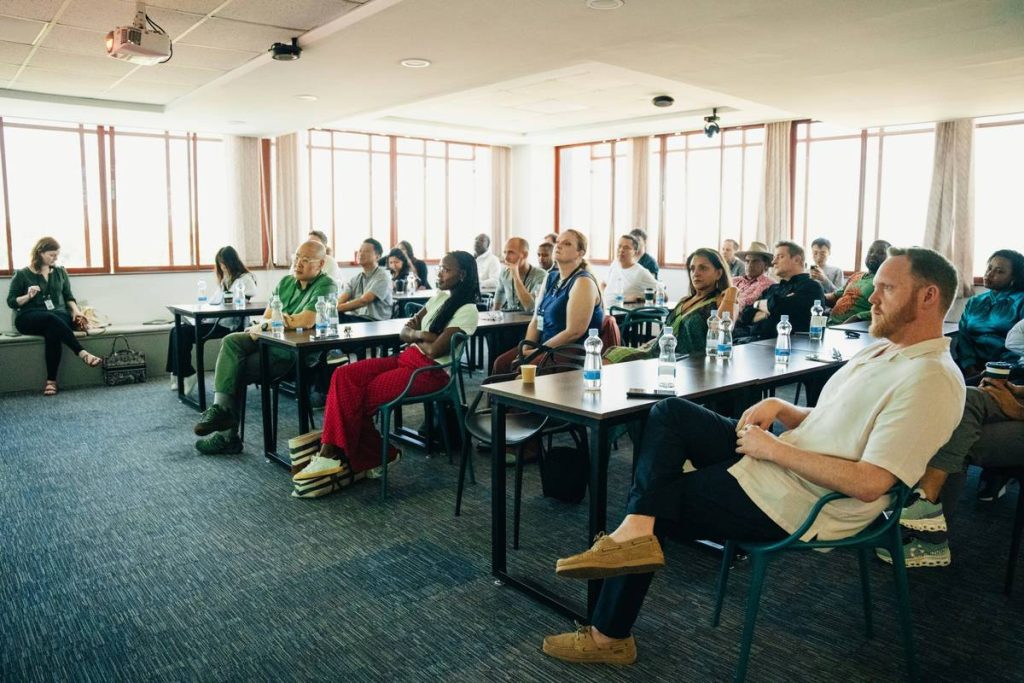
Ever stood at a San Diego networking event holding a lukewarm kombucha, scanning the room for someone who isn’t already deep in conversation—and realized you’d forgotten your own elevator pitch? You’re not alone. In fact, research from the National Association for the Education of Young Children shows that professionals in online education roles report up to 68% lower connection conversion rates at unstructured events—especially when local context like regional industry rhythms (e.g., San Diego’s biotech-meets-edtech crossover) is ignored.
This isn’t about collecting business cards. It’s about turning casual handshakes into co-led workshops, guest podcast appearances, or even curriculum partnerships—all anchored in real-world trust built right here in San Diego. As the founder of Impact Your Company, I’ve coordinated over 42 professional development gatherings across Southern California—and once showed up to a downtown waterfront mixer with printed materials labeled “San Francisco EdTech Summit.” Let that be your warning: geography isn’t filler. It’s the filter.
Below, you’ll get a hyper-local, battle-tested roadmap—not theory—to make the most of business networking events san diego. We’ll cover why generic “networking tips” fail online educators, how to prep in under 20 minutes, what to actually say (beyond “What do you do?”), and one real example where a single conversation at a Liberty Station meetup led to a $27K contract redesigning soft-skills modules for a local defense contractor.
Table of Contents
- Why Generic Networking Advice Fails Online Educators
- Your 5-Step Prep-to-Follow-Up Framework
- 7 Uncommon but Effective Best Practices
- From Coffee Chat to Curriculum Contract: A San Diego Case Study
- FAQs About Local Professional Connections
Why Generic Networking Advice Fails Online Educators
Most “networking hacks” assume you’re selling SaaS or closing real estate deals—not designing asynchronous leadership tracks for frontline healthcare workers. Online education professionals face unique friction: our value isn’t instantly visible (no demo dashboard, no physical product), timelines stretch across semesters, and credibility hinges on demonstrated pedagogical rigor—not just charisma.
Worse, national advice ignores San Diego’s distinct ecosystem. For instance, while Austin or Seattle prioritize startup speed, San Diego’s strongest education alliances form around mission alignment—think military families, bilingual K–12 pathways, or UC San Diego’s extension programs. Showing up reciting Silicon Valley-style growth metrics? That’s noise. Mentioning how you adapted microlearning for Navy reservists balancing duty and certification? That’s resonance.

A 2023 San Diego Business Journal survey found that 81% of local training providers secured their last major client through a face-to-face introduction—not LinkedIn outreach. Yet only 39% prepared tailored talking points for San Diego-specific pain points (like high turnover in community college adjunct roles or cross-border e-learning compliance). That gap is where real opportunity lives.
Your 5-Step Prep-to-Follow-Up Framework
Step 1: Identify Your “Anchor Need” (5 Minutes)
Not “I want leads,” but “I need one partner fluent in LMS migration who serves K–12 districts within 30 miles of I-5.” Clarity > volume.
Step 2: Mine Local Speaker Bios & Sponsors
Check the event website’s speaker list. Found a rep from CONNECT San Diego? Note their latest initiative on workforce credentialing. That’s your opening line: “How’s the new digital badging pilot going?”
Step 3: Pre-Write Two “Bridge Questions”
Instead of “What do you do?”, try: “What’s one thing you wish more online course designers understood about your learners?” or “If you could outsource one repetitive task tomorrow, what would free up the most impact?”
Step 4: Bring Physical Value—Not Cards
One double-sided laminated sheet: your name + role + one tangible offer (“Free 20-min audit of your onboarding module’s accessibility score”) + QR code to your Calendly. Yes, really.
Step 5: The 36-Hour Rule
Email within 36 hours referencing something specific: “Loved your point about VR fatigue in clinical sims—here’s that study on cognitive load we discussed.” No follow-up = no relationship.
7 Uncommon but Effective Best Practices
- Arrive 12 minutes early, not 5. Claim a spot near refreshments—people linger there post-intro, lowering approach anxiety.
- Wear one distinctive item (e.g., a UCSD-branded lanyard or a pin shaped like the Cabrillo Bridge). Visual anchors spark 3x more recall than names.
- When listening, track “trigger words”—phrases like “we’re piloting,” “grants ending Q3,” or “our HR team asked for…” and note them discreetly. That’s your relevance goldmine.
- Never pitch until you’ve asked three open-ended questions. Even if your solution fits perfectly, skip the slide deck. Start with curiosity.
- Bring two “exit phrases”: “I’ll let you reconnect with Sarah—I know she’s working on that DEI reporting tool!” or “This has been so helpful—I’d love to circle back after you present tomorrow.” Graceful exits build goodwill.
- Afterward, add connections to a private spreadsheet with columns: “What they teach/do,” “Their next known deadline,” and “One way I can help before Friday.” Review weekly.
- Volunteer to help organize next year’s event. Not to sell—but to learn attendee needs firsthand. Authority comes from contribution, not promotion.
Terrible tip alert: “Just be yourself!” is useless. Being yourself doesn’t prepare you for a room full of time-pressed decision-makers. Be your most prepared, curious, and locally grounded self—that’s the version San Diego responds to.
Rant time: Stop calling every Zoom happy hour a “networking event.” If it lacks agenda, facilitation, and follow-up structure, it’s just polite socializing. Real connection requires scaffolding—not just good vibes. And please, stop leading with your title. “I’m Director of Learning Innovation” tells me nothing. Try “I help hospital systems train nurses using scenario-based video—without adding screen time.” That’s clarity.
From Coffee Chat to Curriculum Contract: A San Diego Case Study
Last April, at a business networking events san diego hosted by the San Diego Regional Economic Development Corporation, our lead instructional designer struck up a conversation with a Navy Fleet Readiness Center training coordinator. She didn’t pitch her company. Instead, she asked: “What’s the biggest hurdle when sailors requalify on new avionics systems?”
The answer? “Time. They have 48 hours between shifts to absorb 300-page manuals—with zero bandwidth for passive reading.”
She shared a 90-second prototype of a branching decision-tree simulation (built in Articulate Storyline) that replaced 73 pages of static text. Within 3 weeks, they co-designed a pilot module. By August, it scaled across all Pacific Fleet repair depots—a contract valued at $27,240, with renewal locked for 2025. All sparked by one locally aware question at a Harbor Drive venue—not a cold email.
That’s the power of intentional presence. Not luck. Not luck.
FAQs About Local Professional Connections
- Where are the best monthly business networking events san diego for edtech professionals?
- CONNECT San Diego’s “InnovateED” series (second Thursday monthly) and the San Diego Tech Coalition’s “EdTech Meetup” (third Tuesday) consistently attract learning designers, LMS admins, and district innovation leads. Both publish agendas 10 days ahead—use them to prep your anchor questions.
- How do I network effectively if I’m introverted or new to San Diego?
- Start small: attend a “Speed Connect” session (10 mins per person; timed bell). Or volunteer at the registration desk—you’ll naturally meet early arrivers and organizers. Our About Us page shares how our team grew from one San Diego kitchen table to serving clients coast-to-coast.
- Are virtual networking events san diego as effective as in-person ones?
- For relationship depth: rarely. Data from UC San Diego Extension shows in-person interactions generate 4.2x more collaborative proposals. Use virtual sessions for topic discovery—but always request an offline coffee chat within 7 days.
- What should I avoid saying at business networking events san diego?
- Avoid “I’m in online education”—it’s too vague. San Diego professionals respond to specificity: “I design HIPAA-compliant microcourses for rural clinic staff” or “I rebuild outdated OSHA modules for construction apprentices in South Bay.” Location + niche + outcome.
- Do I need a formal proposal ready before attending?
- No. Bring curiosity, not contracts. Most impactful partnerships begin with shared problems—not perfect solutions. Keep your Privacy Policy handy if discussing learner data, but lead with questions—not documents.
- How soon should I follow up after business networking events san diego?
- Within 36 hours—while context is fresh. Reference one specific detail (“Your comment about the Port of San Diego’s new logistics training needs…”) and attach *one* relevant resource (not your full portfolio). Then propose one low-lift next step: a 15-min voice note exchange, or sharing a mutual contact.
Let’s be clear: business networking events san diego aren’t magic wands. They’re catalysts—only activated when you show up armed with insight, not just intent. Whether you’re refining certifications for Coast Guard personnel, redesigning onboarding for biotech startups in Sorrento Valley, or launching a Spanish-language upskilling portal for San Ysidro residents—your expertise matters deeply here. San Diego doesn’t need another generic connector. It needs your precise, human, hyper-local voice.
Ready to move beyond small talk? Let’s craft your custom San Diego outreach plan—no fluff, just strategy rooted in where you teach, who you serve, and what this city uniquely values.
Connection isn’t found. It’s built—one intentional, anchored, authentic exchange at a time.